
From Keywords to Culture—Write with Purpose
In today’s fast-paced digital world, writing isn’t just about filling a page with words or stuffing articles with keywords. True impact comes when words carry meaning, when they align with cultural nuances, and when they serve a purpose greater than just ranking on Google. That’s where the philosophy of “write with purpose” comes into play.
Think of it this way: keywords may bring people to your content, but it’s culture, authenticity, and connection that make them stay. Brands, bloggers, and businesses that understand this balance end up not just ranking higher in search results but also leaving a lasting impression on their audience. Let’s explore how you can shift from simply targeting keywords to embracing culture and purpose in your writing.
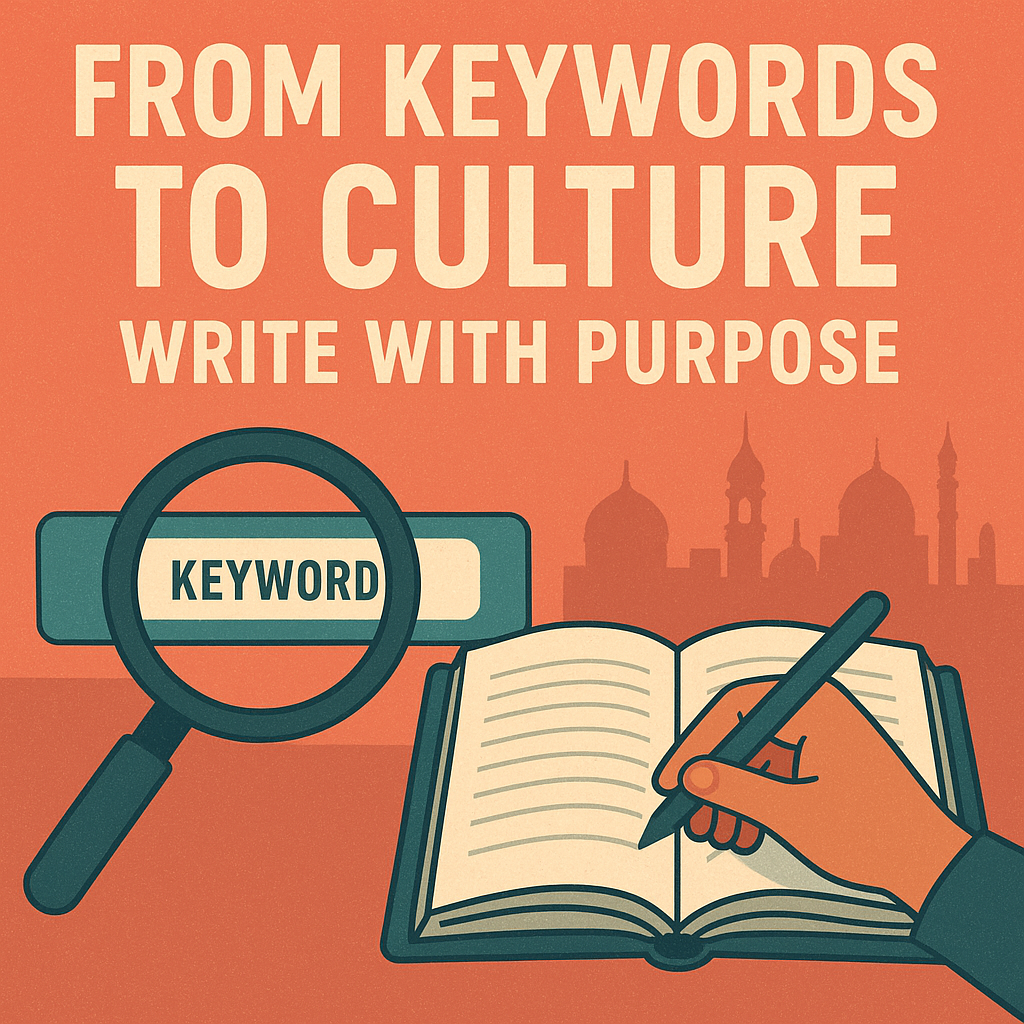
The Evolution of Writing for the Web
A decade ago, digital writing was all about stuffing as many keywords into a blog post as possible. The goal? To trick search engines into ranking the page higher. It worked temporarily, but the content often felt robotic, lacked personality, and failed to connect with readers.
Fast forward to today, and the landscape has completely changed. Google’s algorithms now prioritize user experience, intent, and relevance over keyword density. This means you can’t just write for the algorithm—you have to write for people.
But there’s more to it than SEO rules. People are tired of cookie-cutter content. They crave storytelling, relatability, and values that resonate with them. That’s why writing with purpose is no longer an option—it’s a necessity.
Why Writing With Purpose is important
Purposeful writing is more than a content strategy; it’s about creating meaningful conversations. Here’s why it matters:
- Builds Trust: Readers can tell when you’re writing for clicks versus when you’re writing to add value. Trust grows when you prioritize honesty and helpfulness.
- Strengthens Brand Identity: Purpose-driven content reflects your values, mission, and what sets you apart.
- Drives Deeper Engagement: When people connect with your content emotionally, they’re more likely to comment, share, and come back.
- Lasting Impact: Keywords may help you get discovered, but purposeful writing ensures you’re remembered.
It’s like the difference between a billboard on the highway and a heartfelt letter—you might notice both, but one leaves a mark.
Balancing Keywords and Culture
Now, let’s be clear: keywords still matter. They’re the bridge between what people search for and the answers they find. But using them without considering culture is like trying to start a conversation without listening first.
For example, let’s say you’re writing about healthy eating. Using a keyword like “healthy recipes” is fine, but if your audience is part of a culture that values traditional meals, weaving in cultural references and respect for heritage will make your content resonate far more deeply.
Writing with purpose means:
- Doing keyword research to understand what people are searching for.
- Studying audience culture and context to understand why they are searching for it.
- Combining both into content that feels personal, relevant, and authentic.
This balance is the sweet spot where SEO meets storytelling.
Practical Tips to Write With Purpose
If you’re ready to move beyond surface-level writing, here are some steps to start:
1. Understand Your Audience Deeply
Don’t just know their demographics; understand their challenges, aspirations, and cultural background. Create audience personas that reflect their lifestyle and mindset.
2. Define Your Message Clearly
Ask yourself: What is the one takeaway I want my reader to have? Your purpose should be the guiding star for every piece of content you create.
3. Blend Keywords Naturally
Use keywords as anchors, not crutches. Instead of forcing them, integrate them naturally into sentences where they add value.
4. Tell Stories
Stories are universal. Whether you’re writing for a global brand or a niche audience, stories create emotional connections that pure facts can’t.
5. Write With Empathy
Empathy bridges the gap between data and humanity. Acknowledge your readers’ struggles and offer solutions in a tone that feels supportive, not salesy.
The Long-Term Benefits of Purposeful Writing
When you write with purpose, you’re playing the long game. Instead of chasing temporary clicks, you’re building a loyal community. Here’s what you gain:
- Higher SEO Rankings: Search engines reward content that people actually engage with.
- Increased Conversions: Purpose-driven writing nurtures trust, which leads to more sales, subscriptions, or sign-ups.
- Cultural Relevance: Staying attuned to cultural shifts makes your content timeless and relatable.
Sustainable Growth: Instead of relying on tricks, you’re building a foundation that lasts.
Conclusion
In a world flooded with content, the difference between being just another blog and becoming a trusted voice lies in your ability to write with purpose. Keywords get your content seen, but it’s culture, empathy, and authenticity that give it staying power.
Writing with purpose isn’t about choosing between SEO and storytelling—it’s about weaving them together to create content that informs, resonates, and inspires. So, the next time you sit down to write, don’t just think about the algorithm. Think about the human on the other side of the screen waiting for words that matter.
FAQs
1. What does “Write with Purpose” mean?
It means creating content that goes beyond SEO and connects with your audience through authenticity, values, and culture.
2. Should I stop using keywords if I want to write with purpose?
No. Keywords are still important for SEO, but they should be balanced with meaningful, audience-focused writing.
3. How do I find the cultural angle in my writing?
Research your audience, understand their values, and pay attention to current cultural trends that influence how they consume content.
4. Can purposeful writing help with branding?
Absolutely. It reflects your mission and values, making your brand stand out in a crowded market.
5. How do I get started with writing more purposefully?
Start by identifying your audience’s needs, setting a clear message, and writing with empathy while blending keywords naturally.